By the Balimoney.exchange Editorial Team | Last Fact-Checked & Verified: November 2026
The Christchurch-to-Denpasar Travel Corridor and the Hidden “Holiday FX Tax”
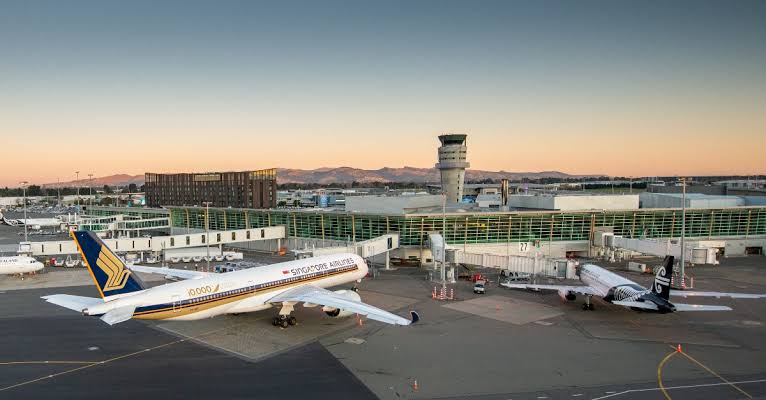
You are standing in Christchurch International Airport (CHC), jandals in your daypack, with a long hop ahead. There is rarely a direct flight from Christchurch to Denpasar. Most journeys connect through Auckland, Sydney, Melbourne, Brisbane or Singapore, on airlines such as Air New Zealand, Qantas, Jetstar, Virgin Australia and Singapore Airlines. Door to door, expect roughly 12 to 20 hours depending on the connection. Bali is five hours behind New Zealand during daylight saving and four hours behind outside it. Schedules change by season, so confirm with your airline.
The flights are the easy part. The money is where most travellers quietly leak. A typical routine looks like this: buy some US dollars at a bureau, tuck them into a money belt, and rely on a debit or credit card for the rest. Every step has a hidden margin. We call this the Holiday FX Tax: layers of spreads, flat fees and percentage fees that never show up as one number, which is why most people never add them up.
Then there is the problem with notes. Money changers in Bali often reject US$100 bills printed before 2013, and notes that are creased, torn or stamped. New Zealand dollars are accepted by fewer changers than you might expect, usually at a poorer rate. A rejected note is a total loss.
This guide sets out a different approach. You travel without a wad of cash, hold your budget as USDT (Tether), a stablecoin pegged to the US dollar, and after you land you convert it to rupiah through a licensed partner. Then you collect cash from an airport ATM without a card.
We will walk through the economics, the technology, the exact steps, the airport, the security and the regulations. We will also be upfront about where this method has limits, because honest numbers are what help you at 11 pm in an arrivals hall.
Transparency note: BaliCrypto.shop is an aggregator. We are not an exchange, broker or bank. We connect customers with more than four licensed exchange partners that carry out the USDT-to-IDR conversion. Nothing here is financial, legal or tax advice.
The Hidden Economics of NZD-to-IDR Exchange: Why Christchurch Travellers Lose 6% to 12% on Traditional FX
Christchurch travellers typically lose 6% to 12% through wide airport booth spreads, double conversion (NZD to USD to IDR), international card fees, overseas ATM charges and dynamic currency conversion (DCC). The true cost only shows when you compare the rupiah you receive with the mid-market rate on the same day.
The spread: the invisible margin
Every provider shows a buy rate and a sell rate on either side of the mid-market rate, the one you see on a search engine. The gap between them is the spread. Airports charge more because rent is high, competition is limited and travellers are tired. If you turn NZD into USD at home and then USD into rupiah in Bali, two spreads stack, and the total can reach 6% to 12%.
In fairness: trustworthy money changers
We should be straight with you. A reputable authorised changer in Bali that accepts clean, new US dollars can offer a tight margin, sometimes as low as 1.5% to 4% on the Bali side. The catch is that you must buy those US dollars in New Zealand first, which carries its own margin, carry the cash across several airports, and hope every note is accepted. Add the two sides together and you are often at 3% to 7%, before counting the risk.
NZ bank card fees
Cards from ANZ NZ, ASB, BNZ, Kiwibank and Westpac NZ generally charge an international transaction fee that is often in the range of about 2.5% to 3%, plus a flat fee for each overseas ATM withdrawal that is commonly around NZ$5. Add the local ATM operator’s fee in Indonesia, usually a few dollars more. These numbers are approximate. Your bank’s current fee schedule is the reference, and it can change.
Wise and other fintech options
Wise and similar cards can offer lower margins, but conditions differ by plan: free withdrawal limits per month, per-withdrawal caps and the chance of a temporary block. Read the official terms before relying on a single card.
The DCC trap
The ATM or card terminal asks: “Charge in NZD or IDR?” The NZD option feels reassuring, but it uses an exchange rate set by the operator, which is almost always poor. Always choose the local currency (IDR). It is the single most important rule for card users.
ATM limits and repeat withdrawals
Many ATMs in Indonesia cap each transaction at a few million rupiah. Someone who needs 19.5 million rupiah may end up making seven or more withdrawals, paying a fresh fee to their bank and to the ATM operator each time.
The physical risks
Carrying large amounts of cash through transit airports invites theft, loss and checks. In Kuta, Seminyak and Canggu, some street changers use counting tricks to confuse customers. The less cash you carry, the smaller your exposure.
Pro Tip: Do not judge by the rate on the board. Compare how many rupiah you actually received with the mid-market rate for the same day. That is the only honest yardstick.
Master Comparison Matrix 2026: Airport FX Booths & NZ Bank Cards vs. USDT Cardless ATM Off-Ramp (With $2,000 NZD Case Study)
On $2,000 NZD, airport booths can cost about $120 to $240, an NZ bank card roughly $111 (more with DCC), Wise about $40 to $70, a trusted Bali changer with clean USD notes $60 to $140, and the USDT cardless route $40 to $80. All figures are estimates.
Case study assumptions
- Starting value: $2,000 NZD
- Illustrative mid-market rate: 1 NZD = 9,750 IDR, which gives a mid-market value of 19,500,000 IDR
- Airport booths (CHC and DPS): combined loss of 6% to 12%
- Trusted Bali changer (clean USD notes bought in NZ): combined loss of 3% to 7%
- NZ bank card: about 2.75% fee and spread, plus seven withdrawals at about NZ$5 bank fee and NZ$3 local operator fee each
- Wise: 2% to 3.5% all-in, including withdrawals
- USDT route: 0.5% to 1.5% spread when buying USDT in NZ, a network fee of about NZ$2 to NZ$5, and a partner spread of 1% to 2%
This is a model, not a quote. Rates and fees move daily. Please recalculate with live figures before you decide.
The matrix
| Factor | Airport FX Booth (CHC/DPS) | Trusted Bali Changer (clean USD notes) | NZ Bank Card (ANZ/ASB/BNZ/Kiwibank/Westpac) | Wise | USDT Cardless ATM |
|---|---|---|---|---|---|
| Spread | 6%–12% | 3%–7% combined | about 2.75% plus DCC risk | low | about 1%–2% (partner) |
| Fixed fees | built into the rate | not visible | overseas ATM fee plus operator fee | depends on plan | no card fees |
| Time to cash | queue | quick | depends on ATM limit | depends on ATM limit | usually 10–30 min after confirmation |
| Skimming risk | low | low | present | present | near zero (no card) |
| Card blocked or swallowed | no | no | possible | possible | no |
| Carry cash | yes | yes (clean notes) | no | no | no |
| Risk of rejected notes | yes | yes | no | no | no |
| Regulatory/tax complexity | low | low | low | low | higher (exchange registration, tax records) |
| Available at DPS | yes | outside the airport | yes | yes | yes, at compatible ATMs |
Case study: $2,000 NZD to rupiah
| Method | Estimated cost | IDR received (approx.) |
|---|---|---|
| Airport FX booths | $120–$240 (6%–12%) | 17.2–18.3 million |
| Trusted Bali changer (clean USD) | $60–$140 (3%–7%) | 18.1–18.9 million |
| NZ bank card (no DCC) | about $111 (5.5%) | about 18.4 million |
| NZ bank card (with DCC) | up to about $200 (10%) | about 17.6 million |
| Wise | $40–$70 (2%–3.5%) | 18.8–19.1 million |
| USDT cardless | $40–$80 (2%–4%) | 18.7–19.1 million |
An honest reading of the results
- USDT clearly beats airport booths and cards with DCC. The gap ranges from about $70 to $160 on every $2,000 NZD.
- Against Wise or a trustworthy changer, the costs are comparable. The USDT advantage is no cash to carry, no risk of rejected notes, and no card that can be blocked while you are overseas.
- USDT is not free. The buying spread, the network fee and the partner’s margin are all counted in the numbers above.
- A stablecoin can lose its peg. USDT has stayed close to one US dollar so far, but there is no guarantee. Convert soon after you land.
- Tax and registration matter. We cover both in the compliance section.
Pro Tip: Mix and match. Keep one card for accommodation and online bookings, and use cash from USDT for everyday spending such as warungs, scooter hire, taxis and tips.
How Cardless ATM USDT-to-IDR Off-Ramping Works: The Technical & Operational Architecture
You send USDT to a licensed exchange partner, which converts it to rupiah at a confirmed rate. You receive a one-time code and withdraw cash from a compatible BCA, Mandiri, BNI or BRI ATM without using a card.
Stage 1: Getting USDT in New Zealand
Before you leave, you buy USDT on a crypto exchange that operates lawfully in New Zealand. Exchanges here are expected to be registered on the Financial Service Providers Register (FSPR) and to meet anti-money-laundering rules supervised by the Department of Internal Affairs, so check a platform’s registration before you deposit. You will need identity verification (KYC), which can take anywhere from minutes to a few days. Start early.
Stage 2: Choosing the right network
USDT exists on several blockchains, including TRC20 (Tron), BEP20 (BNB Smart Chain), ERC20 (Ethereum), Solana, Polygon, Arbitrum and TON. Fees and speed differ. The network you send on must match exactly the network your partner specifies. A mismatch can mean losing the entire amount.
Stage 3: The OTC liquidity bridge
Licensed platforms in Indonesia run over-the-counter (OTC) liquidity: incoming stablecoins are settled against rupiah that are available in the local banking system. Since 2025, crypto asset oversight in Indonesia sits with OJK, which took over from Bappebti. What matters to you is that your partner is licensed.
Stage 4: The cardless withdrawal (Tarik Tunai Tanpa Kartu)
Indonesian banks offer cardless cash withdrawal through their own systems. Instead of inserting a card, a one-time code or QR code is generated and then entered or scanned at the ATM. The exact flow differs by bank and app. In the aggregator model, your exchange partner provides the code or the withdrawal instructions.
Why this beats a local bank transfer
Most New Zealand tourists have no Indonesian bank account and no KITAS (stay permit). A transfer to a local account is usually off the table. Cardless withdrawal needs neither. No New Zealand card is involved, there is no international transaction fee, and there is no DCC question, because you receive rupiah directly.
Verification is a good sign
A serious partner asks for ID and sometimes the source of funds. That protects you and them. Be wary of anyone who asks for nothing at all.
Step-by-Step Blueprint: Converting USDT to IDR Cash After Landing at Bali Ngurah Rai Airport (DPS)
Check your legal and tax position before you fly, set up your account and contacts, get online after landing, lock in a rate on WhatsApp or Telegram, send USDT on the correct network, receive your code, then withdraw cash with no card at a BCA, Mandiri, BNI or BRI ATM.
Phase 1: Preparation before departing Christchurch Airport (CHC)
- Check your position. Talk to an accountant or lawyer about the tax treatment of crypto in New Zealand and what applies to you. Make sure the way you obtain USDT fits your bank’s terms and the law.
- Complete KYC. Finish identity verification on the exchange at least a week before your flight.
- Run a small test. Send about 20 USDT to your partner or your own wallet. Check the network, the address format and the timing. A small test prevents a big mistake.
- Compare network fees. Look at the fees on the compatible blockchains before choosing.
- Save the contacts. Save the official BaliCrypto.shop WhatsApp number and Telegram account before you board.
- Prepare for entry. New Zealanders typically use an electronic visa on arrival (e-VOA, currently about IDR 500,000) and pay Bali’s tourism levy (about IDR 150,000 per person). Confirm the amounts and any arrival card requirements on the official sites.
- Sort your connection. Set up an eSIM or roaming plan that works as soon as you land. Keep your wallet recovery details somewhere safe, not in your photo gallery.
- Minimise cash. If you carry any, make it an amount you can afford to lose, and follow the NZ Customs cash reporting rules (see the compliance section).
Phase 2: Landing in Denpasar (DPS) and getting online
Turn on your eSIM or roaming while you queue at immigration. Free airport Wi-Fi may exist, but it is not reliable. For anything involving a wallet, use mobile data rather than open networks. Do not start a transaction in the queue: immigration first, then baggage, then customs (Bea Cukai).
Phase 3: Locking in the rate on WhatsApp or Telegram
Tell your partner how much rupiah you want, ideally in multiples of Rp 50,000 or Rp 100,000. Ask for written confirmation of the rate, all fees, the network and the final IDR amount before you send anything.
Phase 4: The on-chain USDT transfer
Pick a fast, low-fee network such as TRC20, BEP20 or Solana, if your partner supports it. Copy the deposit address (or scan the QR code) and compare the first six and last six characters. Send the exact amount and share the transaction ID (TXID) with your partner.
Phase 5: Cardless withdrawal at the arrivals hall ATM
Once the transfer is confirmed and converted, you receive your withdrawal code. Head to an official bank ATM in the arrivals hall, choose “Cardless Transaction” or “Transaksi Tanpa Kartu”, enter, depending on the bank, your phone number and the one-time code (often 6 digits), then the amount. Take the cash and the receipt. Many travellers finish this phase in under a minute, and the whole sequence in roughly 10 to 30 minutes (a rough guide, not a promise).
Afterwards
Do not count the cash in public. Split the notes between a pocket, your bag and the hotel safe.
Pro Tip: Ask for a small test amount first. If everything goes smoothly, convert the rest. It limits your risk the first time you use the method.
Navigating Bali Airport (DPS) Like a Pro: Exact ATM Locations, Denominations & Withdrawal Limits
Ngurah Rai Airport has official ATMs from major banks such as BCA, Mandiri, BNI and BRI in the international arrivals area. The per-transaction limit varies by bank and machine, so check the screen and plan several withdrawals if you need a large amount.
Getting your bearings
The airport is in the south of Bali near Kuta. After immigration, baggage and customs you reach the international arrivals hall. Renovations change the layout, so we deliberately avoid quoting counter numbers.
- Look for the bank colours. BCA, Mandiri, BNI and BRI ATMs are usually grouped in or beside the arrivals hall.
- Prefer machines inside the building. Being close to staff and cameras improves safety.
- Follow the signage and the airport’s official channels to confirm current locations.
Denominations: Rp 50,000 and Rp 100,000
Indonesian ATMs mostly dispense Rp 50,000 (blue) and Rp 100,000 (red) notes. Some machines offer only one denomination. Rp 2,000,000 is just 20 notes of Rp 100,000, but Rp 15,000,000 is 150 notes. Keep a few small notes for tips, parking and warungs, because not every vendor has change for large notes.
Withdrawal limits
Per-transaction and daily limits depend on the bank, the machine and the type of withdrawal. A cardless withdrawal may have a different cap from a card withdrawal. On many machines the per-transaction limit is in the range of a few million rupiah. Good practice:
- Check the limit shown on screen before you confirm.
- Ask your partner which limit applies to your code and bank.
- If your total exceeds the cap, plan several withdrawals, possibly at different banks.
- Withdraw enough for the first few days, then top up as needed.
Late-night arrivals and a plan B
ATMs in the hall are generally available while the area is open, but they can run low on cash at busy times. Have a second ATM in mind and a backup payment method.
Pro Tip: Withdraw in daylight if you can. More staff, more people, more safety.
Cyber Security, Anti-Skimming Protection & Regulatory Compliance for NZ Crypto Travellers
Cardless withdrawal nearly eliminates skimming and swallowed cards, because there is no card in the machine. Stay compliant: a licensed partner in Indonesia, local payments in rupiah, a Border Cash Report to NZ Customs for NZ$10,000 or more, and a check of your IRD obligations.
Skimming, blocks and swallowed cards
Card skimming (copying card data) and machines that swallow cards are among the worst scenarios for travellers to Bali. Your bank may also block your card as a precaution when it is used far from home. With no card in the machine, those risks disappear. Even so, stay alert: inspect the ATM, cover the keypad, use machines in secure areas and decline help from strangers.
Crypto wallet hygiene
- Verify every address. Malware can swap the address you copied.
- Confirm the network before you send.
- Never share your seed phrase or private keys. No legitimate service asks for them.
- Beware of impersonators posing as support on messaging apps. Use only the official contacts below.
- Turn on two-factor authentication (2FA) with an authenticator app.
Indonesian rules
Bank Indonesia requires local payments to be made in rupiah. Crypto assets are not legal tender in Indonesia, but trading is permitted through licensed, supervised platforms. So do not pay merchants in USDT, and avoid meeting strangers to “swap” in hotel lobbies. Cash worth IDR 100 million or more must be declared when entering or leaving Indonesia.
New Zealand rules
- Border Cash Report: if you enter or leave New Zealand carrying NZ$10,000 or more in cash or equivalent, you must complete a Border Cash Report for NZ Customs. Confirm the current threshold on the official site.
- Crypto tax: Inland Revenue (IRD) treats crypto assets as property, and whether a disposal is taxable depends on the circumstances, such as why you acquired the asset. Converting USDT into another currency counts as a disposal. Keep records of dates, NZD values, acquisition costs and fees, and check your position with IRD or an accountant.
- Exchange registration: check that your exchange is registered on the Financial Service Providers Register and meets AML/CFT requirements.
- Your bank’s terms: some banks scrutinise or restrict transfers to crypto exchanges, so check yours.
This content is informational and does not replace professional advice.
SafeTravel and consular support
New Zealand’s SafeTravel service publishes advice for travellers to Indonesia, covering safety, local laws, health and natural hazards such as volcanoes and earthquakes. Check it before you go, register your trip, save the contact details for New Zealand’s embassy in Jakarta and take out travel insurance that covers lost cash and medical emergencies.
Pro Tip: Split your funds. Keep a second payment method in a different bag in case the network or the machine fails.
Frequently Asked Questions (FAQ): Top 4 Burning User Queries
1. Which USDT network is fastest and cheapest to use after landing in Bali?
TRC20, BEP20 and Solana are usually fast and low-fee, often confirming within minutes. ERC20 costs more when the network is busy. Your partner must support the network you choose, so confirm it in writing before you send.
2. What are the minimum and maximum rupiah withdrawal limits at Denpasar Airport ATMs?
They depend on the bank, the machine and the withdrawal type. Many ATMs cap each transaction at a few million rupiah. Ask your partner about the limit on your code, and plan several withdrawals or different banks for larger amounts.
3. Does the service work for late-night arrivals from Christchurch?
Often yes, as long as the hall and ATMs are open. Tell your partner your arrival time before you fly, check your data and battery, and have a plan B if a machine is out of order or short of cash.
4. Why is cardless withdrawal safer than using an NZ bank card at a Bali ATM?
There is no card in the machine, so no skimming, no swallowed card, and no precautionary block from your bank. You also avoid overseas ATM fees and the DCC trap. What remains is wallet errors, scammers and compliance, so use a licensed partner.
Travel Light from Christchurch, Land Ready in Bali
On $2,000 NZD, traditional exchange can cost you $120 to $240 before your first nasi goreng in Canggu. With USDT and cardless withdrawal, our model shows about $40 to $80, with no card in the machine and no wad of cash in your bag. Compared with a good Wise card or a trustworthy changer, the price advantage is small, but the safety and independence from a card remain.
The method asks for a little preparation: checking your legal and tax position, understanding networks, running a small test and keeping tidy records. In return, you land in Denpasar with a clear rate and a code that turns into rupiah within minutes. Save the official contacts before you board in Christchurch, so everything is ready when the aircraft door opens.
Talk to BaliCrypto.shop
- WhatsApp: Chat on WhatsApp (+6285176981688)
- Telegram: Message on Telegram (@balicryptoshop)
Disclaimer: BaliCrypto.shop is an aggregator, not an exchange, broker or bank. This content is general information only and is not financial, legal or tax advice. Crypto assets carry risk. Rates, fees, limits and regulations change; verify current details before you travel.
Kiwi travellers, what is your biggest money headache when you land overseas: airport exchange rates, card fees or carrying cash? Share your experience, and any questions about cardless USDT withdrawals in Bali, in the comments below.
Source Reference & Official Travel Resources
- SafeTravel (NZ Ministry of Foreign Affairs and Trade) – Official travel advice for Indonesia, including safety, health and natural hazards, plus consular contact details.
- New Zealand Customs Service – Rules for the Border Cash Report when carrying NZ$10,000 or more across the border.
- Inland Revenue (IRD) – Official guidance on the tax treatment of crypto assets in New Zealand.
- Financial Service Providers Register (FSPR) – A way to check whether a New Zealand crypto exchange is registered.
- Indonesia e-VOA portal (Directorate General of Immigration) – The official portal for applying for an electronic visa on arrival to Indonesia.